

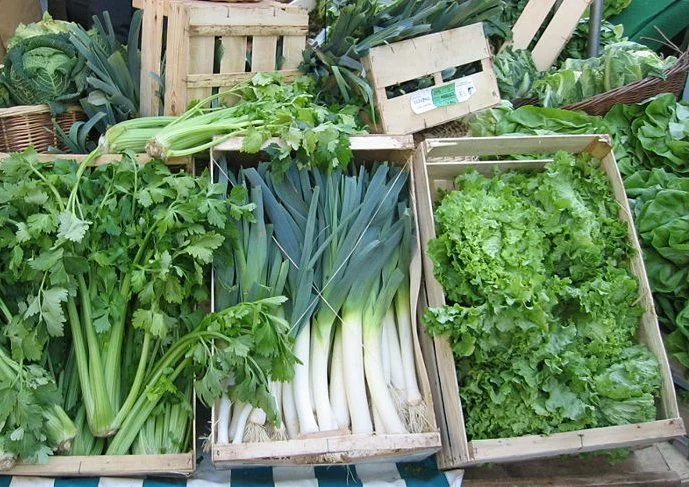
Getting the Most Out of Your Food: Greens
Welcome to the first of a series of articles focused on how to select, store, and prepare vegetables and fruits to maximize their nutrient value. Based on the book Eating on the Wild Side by Jo Robinson (2013), we will explore simple, practical ways to improve your family’s nutrition. Since becoming a mom myself, I’m all about being practical when it comes to nutrition for my family.
Welcome to the first of a series of articles focused on how to select, store, and prepare vegetables and fruits to maximize their nutrient value. Based on the book Eating on the Wild Side: The Missing Link to Optimum Health by Jo Robinson (2013), we will explore simple, practical ways to improve your family’s nutrition. Since becoming a mom myself, I’m all about the practical when it comes to nutrition for my family.
Most Americans don’t consume nearly enough fruits and veggies daily, and even when we do eat them, they are typically the higher glycemic varieties- meaning they have a greater impact on our blood sugar levels- such as carrots, potatoes, apples, grapes and bananas. So even more important than eating your fruits and veggies, is eating the most nutrient-dense varieties, and making sure those nutrients actually make it into the cells of your body, where they do their miraculous work of protecting you from cancer, heart disease, inflammation, viruses and more. This month, we’ll focus on a category of veggies rapidly growing in popularity- greens.
Eat Your Greens- but which ones are best?
All plants produce chemicals that are protective against the damaging elements of their environment including insects, UV light, disease and predatory animals. These chemicals, known as phytonutrients, have significant antioxidant and other protective properties for us when we consume them. The “plant’s protection becomes our protection” as Robinson puts it.
Go for color!
When it comes to greens, ironically, it’s the leafy varieties that are red, purple and reddish brown that are highest in antioxidants- specifically anthocyanins that help us fight cancer, lower blood pressure, slow age-related memory loss and protect against the harmful effects of sugary, fatty foods. The next most nutritious are dark green (kale, spinach, arugula, dandelion greens) and contain lutein a highly protective antioxidant for eye health and reducing inflammation.
Shape matters
Lettuce varieties with tightly wrapped leaves (cabbage, iceberg lettuce) actually contain fewer phytonutrients than loose leaf varieties, since the plants that are more exposed to the sun’s UV rays tend to produce more protective nutrients. Look for red or green loose leaf lettuce for the richest concentration of nutrients.
Go for Organic
Since spinach, kale and collard greens repeatedly make the Environmental Working Group’s Dirty Dozen List, and organic varieties are widely available now, go ahead and go for organic to lessen your family’s exposure to pesticides. You can get a full version of the Dirty Dozen and Clean Fifteen List in pdf or as an app at www.ewg.org.
Storage
For a little effort, you can extend the life of your greens quite a bit. When you bring your greens home from the store, whether bagged, boxed or fresh, soak them in cold water for 10 minutes, dry in a salad spinner, and then place in a resealable bag pricked with 10 to 20 tiny holes. Squeeze out all the air, seal the bag and then store in your crisper drawer. For even added benefit, tear your lettuce into bite-sized pieces, which actually doubles its antioxidant value. It also speeds its decay time so be sure to consume within 1-2 days. If your greens are looking limp, rinse with cold water and spin them to enliven them again.
Prep for the Best
Greens aren’t always the most popular foods with kids because of their bitter taste. While the bitterness often means higher nutrient content, those nutrients won’t do any good if they don’t get swallowed. Try adding avocados, fresh or dried fruit like apples or berries, and even honey or unfiltered apple juice to a homemade salad dressing made with extra virgin olive oil to lessen the bitter taste. And don’t forget to tear them up a few times before eating to increase the antioxidants.
Need more ideas?
Here are some easy ways to add in more greens everyday:
- Get them in first thing: add spinach, kale, or other leafy greens to your morning smoothie, throw in a handful of spinach or arugula chopped finely to your eggs, or even try having a salad for breakfast- yes!
- Add arugula, spinach or mixed greens to your sandwich, or try replacing your bread with a big leaf of lettuce for a wrap.
- Add to soups and dips.
- Make leafy greens the base for your meal- Build a gorgeous salad with a variety of greens as the base- and for variety, add fruit, sprouts, nuts, seeds, boiled eggs, chicken salad, salmon salad and herbs like cilantro or basil.

Wholesome Holidays
As we embark on a season filled with gatherings and events often centered around food, many of us struggle with maintaining balance. While it may be tempting to either give up on our health goals and indulge without a care or avoid gatherings altogether to not be tempted, there are ways to make healthier choices through the season without depriving yourself or your family.
As we embark on a season filled with gatherings and events often centered around food, many of us struggle with maintaining balance. While it may be tempting to either give up on our health goals and indulge without a care or avoid gatherings altogether to not be tempted, there are ways to make healthier choices through the season without depriving yourself or your family. These principles of eating and living well can even carry over into your family’s daily life after the holidays.
Choose real, whole foods as much as possible.
Author Michael Pollan offers this suggestion when deciding if a food is real and whole. Simply ask, “Would our great-grandmothers recognize this as food?” Food products or ‘industrialized foods’ are largely composed of processed derivatives of wheat, corn, soy, potatoes, as well as lots of sugar. They come in boxes and packages and are typically found in the center aisles of the grocery store. These refined foods are often stripped of their naturally-occurring vitamins and nutrients during the refining process and may have them added back in, with the labels ‘fortified’ and ‘enhanced’. Real, whole foods don’t need to be fortified, as their complex dynamic of nutrients remains intact. Often, real foods will have a richer flavor than their highly processed counterparts, which means we feel satiated with less food. Examples of real, whole foods include meats, fish, eggs, cheese, whole milk, fresh fruits and vegetables, nuts, seeds, and grains like rice, quinoa, barley and oats.
Shop farmer’s markets for fresh, seasonal ingredients for your holiday meals.
You are not likely to come across harmful processed food ingredients such as high fructose corn syrup and chemically-altered fats (trans fats) at the farmer’s market. Often, you can bring home more for your money at a farmer’s market- including flavor! Farmers will have foods that are in season and local, which means more flavor and freshness for your family’s holiday meals. Local Houston Markets include:
Rice University Farmer’s Market
Sugarland Market at the Imperial Sugar Factory
Also, check out this great Guide to Houston's Best Farmer's Markets.
Consider updating or retrodating your family recipes to include real, whole food ingredients.
Many family recipes contain highly processed ingredients once thought to be healthy. Substituting real, organic butter for margarine or vegetable shortening is one way to eliminate harmful chemically-altered fats from recipes. Trans fats are the hydrogenated oils found in many food products which are known to promote inflammation, insulin resistance, and cholesterol imbalance. Try substituting coconut oil, known for its anti-inflammatory and metabolism-enhancing properties, instead of processed vegetable oils such as canola, safflower, soybean, and other vegetable oils when cooking. Another great butter option for those who can’t tolerate dairy is ghee, or clarified butter. You can purchase it at most grocery stores, or it is easy to make your own from organic butter. Here is a step-by-step tutorial to make your own ghee. Other ideas to update your recipes include using fresh ingredients over canned when possible (green beans, pumpkin, stocks) as well as substituting real cane sugar, honey or molasses for refined white sugar for added nutrients.
When we eat is as important as what we eat.
Eat small, frequent meals throughout the day rather than avoiding food altogether until the big meal or party. You will keep your blood sugar balanced and avoid the tendency to overeat. If you know you’re going to indulge in rich foods, choose fresh, raw veggies and lean protein for your other meals. To ensure a good night’s sleep, try to allow at least 2 hours after a big, rich meal before going to bed. Rich foods take longer to digest, which calls on your liver and other organs to work harder, making it challenging for your body to relax into a deep sleep until it is done digesting.
Keep it moving: Be active before and after your meals.
One obvious yet often overlooked way to keep things balanced through the holidays is exercise. Many holiday treats are rich in carbohydrates and our bodies are most geared to utilize carbs after a workout. Knowing this, we can plan meals and exercise accordingly. Some ideas include a bike ride or outdoor games (remember freeze tag, frisbee, flashlight tag, and hide-and-go seek?). Even a walk with a few intervals of skipping or jogging will do the trick. And as tempting as it is to lounge around after a meal, your body will digest your food and you will likely feel better if you take a light 10-15 minute walk after a large, rich meal. Try taking a family walk between the meal and desert. Then eat and enjoy every bite of that pumpkin pie!
More tips to balance holiday indulging:
- Enjoy everything you put in your mouth by tasting and appreciating the flavors and textures of the food.
- Eat slowly and chew each bite completely.
- Drink plenty of water between meals to assist in digestion and elimination.
- Fuel up with nutrients before you go. Since most parties serve carbs, fats and sugar almost exclusively, eat a small portion of protein and healthy fats before a party or event to ensure that you get a balanced intake of nutrients such as a 1/2 avocado with lemon and real salt, celery with almond butter, cucumbers with hummus, or a green smoothie are a few ideas.
- Take good food with you (in the car, to parties, and to dinners).
- Supplement with a high quality multivitamin, freeze-dried green powder, probiotic, and fish oil.
- If attending lots of parties and functions during the holidays, eat very clean when you’re at home-mostly veggies and protein.
Relax and give yourself plenty of grace and forgiveness this season. If you choose to indulge, taste and enjoy every bite! Guilt has no place at the table.

What is Wellness Coaching?
Wellness Coaching is a partnership to navigate the gap between where you are and where you want to be. Together we’ll discover and embrace your very best in your body and life in this moment- this very real, often messy, totally incredible moment.
As a nurse, wellness coach, massage therapist, and parent, I believe families need more support now than ever to live healthy, joyful lives. With so much information to navigate and so many threats- both real and perceived- to our emotional, mental, spiritual, and physical health and well-being, it’s no wonder many of us feel overwhelmed, anxious, fearful, and disconnected.
Here’s what I know:
You want a healthy family, healthy home and healthy children. You want to feel energized, alive, connected, and joyful. And you don’t want to do it alone.
You don’t have to.
Wellness Coaching is a partnership to navigate the gap between where you are and where you want to be. Together we’ll discover and embrace your very best in your body and life in this moment- this very real, often messy, totally incredible moment.
Wellness Coaching is not a prescribed regimen of “do this, don’t do that.” It’s not rules, restrictions, judgement, shame, or rigid living.
Coaching is about discovery, connection, and gaining the skills to navigate family life with greater ease and vitality. It’s about making connections between your environment and it’s impact on your health and well-being. Wellness Coaching is support in navigating the healthiest products for your home and family. It’s about supporting and enhancing your body’s ability to detoxify naturally with food and relaxation practices. It’s about embracing your vulnerabilities to move towards the healthy life you want for yourself and your family. It’s about living well.

What happens in a coaching session?
We will begin right where you are. Maybe you know what you want to work on. Maybe you just know something needs to change. Either way, we’ll begin with a Discovery Session to get clear on what you want and where we’re headed.
Together we will create a Wellness Map to guide us towards your healthiest life. We may use tools such as visualization, body awareness, and mindfulness practices to support our work together. With Ongoing Support we’ll work together through the inevitable challenges that get in the way of creating new habits in your lifestyle. I’ll be cheering you on every step of the way. You go, you.
“Brandie is able to help me focus on an issue or struggle in my life, label it, and set an intention. I walk away from my sessions always feeling more clear about my struggle and with a plan. My husband sees how our entire family benefits and encourages me to make working with Brandie a regular part of my life. As a wife, mother of three young children, and small business owner, the level of stress I feel can be overwhelming. My coaching and massage sessions help me clarify the current issue, focus on facing it in a healthy way and move forward with an intention. ”
Indoor Air Quality + Your Health
Air pollution is a familiar topic for most of us who live in Houston and surrounding areas. Despite recent improvements in Houston's air quality, we are still noncompliant with current ozone recommendations due to our close proximity to the petrochemical industry along the coast and a warm climate that encourages ozone production. However, awareness is growing of the role that indoor air pollution has on our health- especially when it comes to our children.
Air pollution is a familiar topic for most of us who live in Houston and surrounding areas. Despite recent improvements in Houston's air quality, we are still noncompliant with current ozone recommendations due to our close proximity to the petrochemical industry along the coast and a warm climate that encourages ozone production. However, awareness is growing of the role that indoor air pollution has on our health- especially when it comes to our children. Children are at a greater risk for harm than adults because their lungs are still developing and they breathe more air per pound of body weight than adults. The Centers for Disease Control and Prevention estimates the number of American children and teenagers with respiratory and skin allergies has continually increased since 1999, and asthma alone accounts for 14 million lost school days annually. While there are multiple causes of allergies and asthma, allergens in the indoor environment are a prominent culprit.
The Environmental Protection Agency (EPA) has identified indoor air quality as one of the top five environmental risks to public health, and that indoor air is 2 to 5 times more polluted than outdoor air. Say what? I was a little shocked to hear this.
Indoor air pollution can be due to a variety of causes. The release of Volatile Organic Compounds, or VOCs, from furniture, rugs, paint, building materials, vinyl shower curtains, cleaning supplies, and tempurpedic mattresses, is one prominent source. Synthetic fragrances in trash bags, dish soaps, cosmetics, candles, and air fresheners emit VOCs as well. One study found that the average American home contains over 500 chemicals, 120 of which were unidentifiable by the researchers. Yikes! The health effects of indoor air contaminants range from pesky allergic responses like sneezing and nasal stuffiness to asthma and more severe effects from long-term exposure like certain cancers.
The good news is that there are simple ways to clean up the air in your home. Here are a couple of tips that you can implement today:
- Prevention- choose products that are known to be allergen-friendly and low in VOCs.
- Ventilate your home by opening windows, even for a few minutes a day, on moderate to low ozone days. It’s the second best solution after prevention. You can monitor outdoor ozone levels in the Houston area here.
- Use exhaust fans when cooking and bathing.
- Diffuse essential oils like lemon, white fir, or On Guard. I use both doTerra and Young Living Essential Oils.
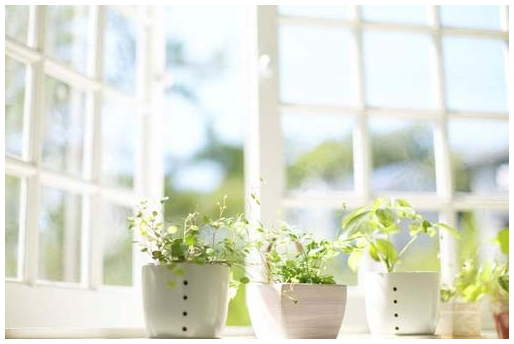
- Grow indoor plants (this is my favorite one!), which absorb air impurities. Areca palm, lady palm, bamboo palm, rubber plant, and Boston fern are effective at filtering the air.
- Monitor dust levels in your home and clean regularly with natural, non-toxic cleaners.
- Vacuum at least twice a week using a HEPA filter, and/or mop floors.
- Consider a free-standing HEPA air purifier, especially if anyone in your family has respiratory allergies or asthma.
- Check the air in your home. Test for radon and keep carbon monoxide and smoke detectors in good condition.
Before purchasing a product to bring into your home, consider these three questions:
- What is the source of this product (is it plastic or pressed wood, does it have an odor)?
- Is there a cleaner version of this product that I can find?
- Do I really need this product?
For More Information:

Examining Our Body Care Products
We love our body care products in the US, don’t we? Lotions, make-up, creams, shampoos, soaps, mouthwash, deodorant, perfume- all of these products we use daily, and the synthetic chemicals they contain, can actually have a significant impact on our health.
We love our body care products in the US, don’t we? Lotions, make-up, creams, shampoos, soaps, mouthwash, deodorant, perfume- all of these products we use daily, and the synthetic chemicals they contain, can actually have a significant impact on our health.
Many of us have body care products we swear by and love using because of the scent, the look, they "work", a heavy marketing influence, or some other nostalgic reason. I believe we also want to make choices that we feel good about as informed consumers and health advocates for our families.
As a community health nurse, I encourage education, awareness, and consideration of the Precautionary Principle in purchasing and using body care products. The Precautionary Principle states: When an activity raises threats of harm to human health or the environment, precautionary measures should be taken even if some cause and effect relationships are not fully established scientifically (Retrieved from http://www.sehn.org).
If there ever was a time to examine what we are putting on our skin, in our hair and in the air around us, it is during pregnancy and when we have young children in the home. More than 200 industrial chemicals have been discovered in the cord blood of newborn babies, raising concern about the toxic burden on young children. Children are more susceptible to these chemicals in products used in the home because their small body mass means that even minimal exposures can have a bigger impact on their developing immune systems.
A few fun facts about the cosmetic industry:
- The Food and Drug Administration has no authority to require companies to test cosmetics products for safety. The agency does not review or approve the vast majority of products or ingredients before they go on the market. FDA conducts pre-market reviews only of certain cosmetics color additives and active ingredients that are classified as over-the-counter drugs (FDA 2005, 2010).
- With the exception of color additives and a few prohibited substances, cosmetics companies may use any ingredient or raw material in their products without government review or approval (FDA 2005). Whereas the European Union has banned more than 1,000 ingredients from use in cosmetics, the FDA has only prohibited 8 (FDA 2000a).
- The FDA has authorized the cosmetics industry to police itself through its Cosmetics Ingredients Review panel. In over 30 years, the panel has only declared 11 ingredients or chemical groups as unsafe, although this recommendation is not binding on companies. People are exposed to cosmetics ingredients in many ways: breathing in sprays and powders, swallowing chemicals on the lips or hands or absorbing them through the skin. Biomonitoring studies have found that cosmetics ingredients – such as phthalate plasticizers, paraben preservatives, the pesticide triclosan, synthetic musks and sunscreen ingredients – are common pollutants in the bodies of men, women and children. Many of these chemicals are potential hormone disruptors (Gray 1986, Schreurs 2004, Gomez 2005, Veldhoen 2006).
- Cosmetics frequently contain enhancers that allow ingredients to penetrate deeper into the skin. Studies have found health problems in people exposed to common fragrance and sunscreen ingredients, including increased risk of sperm damage, feminization of the male reproductive system and low birth weight in girls (Duty 2003, Hauser 2007, Swan 2005, Wolff 2008).
Source: The Environmental Working Group: Myths on Cosmetic Safety
In general, I prioritize products that are going to have the biggest impact on my family’s health this way:
- Products that cover a lot of skin surface area (lotions, body oils, foundation, sunscreen)
- Products that go in our mouths (toothpaste, mouthwash, lipstick, chapstick)
- Products with fragrances or that could be inhaled (perfumes, hairsprays, body sprays)
- Things we use multiple times a day (hand soap)
I do NOT lose sleep (anymore) over these things:
- Makeup such as eye shadow, eyeliner and mascara
- Nail polish
Once again, The Environmental Working Group’s work in this area is incredibly helpful. They have created a guide with over 68,000 products you can search for a score based on potentially harmful ingredients. CHECK IT OUT HERE. EWG also has a Guide to Safer Sunscreens to help you make wise for your family. I have found these resources to be so helpful in navigating this often overwhelming issue and most of the safer products can easily be found in stores and online.
Fostering Healthy Eating Habits in Children: Watch Your Language
As parents and educators, we have the opportunity to make a big impact on young children’s relationship with food, eating, and their bodies. Most of us know this, and want to do our best in shaping healthy eating habits in our children, yet often we have our own issues with food that impact what we say and do.
As parents and educators, we have the opportunity to make a big impact on young children’s relationship with food, eating, and their bodies. Most of us know this, and want to do our best in shaping healthy eating habits in our children, yet often we have our own issues with food that impact what we say and do. In writing this post, I am acutely aware of my own tendencies to over-control what and how my child eats.
Early childhood research supports the critical importance of the language we use when interacting with children about food. We can use verbal cues to help them recognize their hunger and satiation and even support self-regulation of the food and drinks they consume, often encouraging healthy eating decisions (McBride & Dev, 2014). Instead of saying, “Are you done?” we can say, “Are you full?” and instead of saying, “When you play with your cup, you’re showing me you are done” try, “If your tummy is full, you can put your plate on the counter, wash your hands and then play” or “You can eat until your tummy feels full and then you can play.” These may seem like minor tweaks, but the intention behind them is huge. When we attempt to control the amount of food our children eat at mealtime (even with the best intentions), we are communicating to them that we do not trust their internal cues of when they are hungry and full. Instead, we want to do all we can to support and encourage their connection to their internal hunger and satiation cues- a healthy skill they need for the rest of their lives.
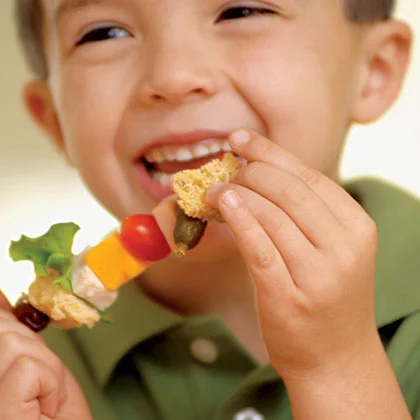
Children are always watching what we do and say, and we have an opportunity to guide them towards healthy eating habits by modeling them ourselves. Sitting and eating with children during mealtimes is a simple way to model healthy behaviors with our language and actions. Showing our own enthusiasm (even if it is a little exaggerated) about a food’s color, shape, texture and taste can make a big impact on a child’s willingness to try new foods, and to interact with their own food in a more meaningful way. Talking about how food grows, where it comes from or who made the food brings children to a deeper relationship with their food and may even increase the likelihood that they want to try more nutritious options. I remember sitting with the Pre-K children at Shady Oak Christian School years ago eating my lunch with them, and those around me would express curiosity about my kale salad that I ended up calling “dinosaur skin” because of its rough texture. I would talk about how my body feels when I eat healthy foods- more energy to play, feeling happy and making my body stronger. I later heard from several parents that their child wanted to try some of these healthy foods at home.
We can model listening to our own body’s cues by saying when we are full and pushing our plate away or putting our food away even if there is still food left. These actions are just as powerful as the language we use when guiding children and can certainly benefit our own health as well.
We also want to watch the way we tend to control children’s food choices by saying things like, “Eat your protein first” or “You need to eat your veggies first before I give you some fruit.” Instead, keep offering a variety of foods and model trying new foods yourself so children will be more familiar with them. Although we usually have the intention of encouraging children to eat healthy foods, restricting certain foods can often have the opposite impact, leading to picky eaters and overeating.
In a culture of large portions, distracted eating and lots of processed foods marketed heavily to children, we have our work cut out for us with encouraging healthy eating practices. Thankfully, there's no better place to practice than around your own table.
Reference:
McBride, B.A. & Dev, D. A. (2014). Preventing Childhood Obesity: Strategies to Help Preschoolers Develop Healthy Eating Habits. Young Children, 69 (5), 36 – 41.

Transforming Chaos into Calm
As we become more aware of the patterns and habits that pull us into chaos, often beginning with our thoughts, we can start to make different choices.
“Almost everyone feels completely overwhelmed by the pace and pressures of daily life, and that exhaustion is exacting an enormous toll on family wellbeing.”
–The Secrets of Happy Families by Bruce Feiler
Reading things like that just overwhelms me. It’s like when people would say to me about my daughter Ella, “Oh, I just love that age! Appreciate it now because it goes by so fast!” Really? I already feel enough pressure to be there in every way with my child- to nurture and protect her when appropriate, and to let her fall and take risks and learn her own lessons- all while knowing this time is so fleeting, and she’ll be grown up “before I know it.”
But really those well-meaning reminders are true. We DO need to appreciate where they, and we, are now- not out of fear that it’s all slipping through our fingers and we’ll never have those moments back (hello, anxiety), but simply because when we’re living in a state of appreciation, our lives are so much more enjoyable and we feel more connected and present. And when Ellen Galinsky, author of Mind in the Making, asked children what they want from their parents, what did they say? They want us to be less tired and less stressed. Um, YES PLEASE. I want that too. Now, how are we going to get there?
First, awareness. As we become more aware of the patterns and habits that pull us into chaos, often beginning with our thoughts, we can start to make different choices. In the moments of chaos and stress, we can pause, notice our tension, and ask the simple question, “What am I grateful for right now?” Just asking the question causes our bodies to release more dopamine and serotonin, the neurotransmitters that elevate mood and shift our biology. “It’s not finding gratitude that matters most; it’s remembering to look in the first place,” says Alex Korb, PhD, author of The Upward Spiral. “Remembering to be grateful is a form of emotional intelligence. One study found that it actually affected neuron density. These density changes suggest that as emotional intelligence increases, the neurons in these areas become more efficient. With higher emotional intelligence, it simply takes less effort to be grateful.”
Having a gratitude practice is the foundation of any spiritual path and has even been identified by author and speaker, Dr. Brene Brown, as a daring greatly strategy for overcoming the tendency to numb or shield ourselves from feeling vulnerable- therefore unleashing our courage, creativity, and unique strengths. In her book, Daring Greatly, she writes, “If the opposite of scarcity is enough, then practicing gratitude is how we acknowledge that there’s enough, and we’re enough.”
When we are in “scarcity-mode,” the part of our brain that regulates the fight-or-flight response, or stress response, is active. We are focused on survival, adrenaline and cortisol levels rise, our perspective narrows, and we are often focused on what isn’t working rather than what is. We may have racing thoughts, feel scattered, ungrounded and overwhelmed. If we’re not careful, it’s incredibly easy to live in scarcity most of the time, constantly hustling to get more and do more. In fact, that way of life is so common in our culture that we might not even notice it’s happening. It’s also incredibly exhausting and a sure way to miss the good in our lives.
I used to think that just knowing this information was enough for me to reap the benefits of gratitude. I mean, come on, gratitude is so simple. My mom raised me right, to be polite and say thank you- isn’t that enough? But I have discovered that practicing gratitude in the hardest moments strengthens my resilience to stress and brings a whole new level of goodness that I have access to at all times.
To be clear, this isn’t about dismissing painful or difficult emotions by being polite and positive. A practice of gratitude calls us to a deeper level of engaging with our lives by choosing to focus on what is working, what is abundant, and what is good.
So, what are you grateful for right now? How can you express it? Here are a couple of ideas:
- Jot down a list on a piece of paper, planner or journal
- Post a Facebook status update
- Write a thank you note
- Take a picture and share it on Instagram
- Call someone you're thankful for and tell them.
For more:
“How to Make Stress Your Friend” by Kelly McGonigal